Magnetic Pin or Conventional Pin? A Comparison for Membrane Presses
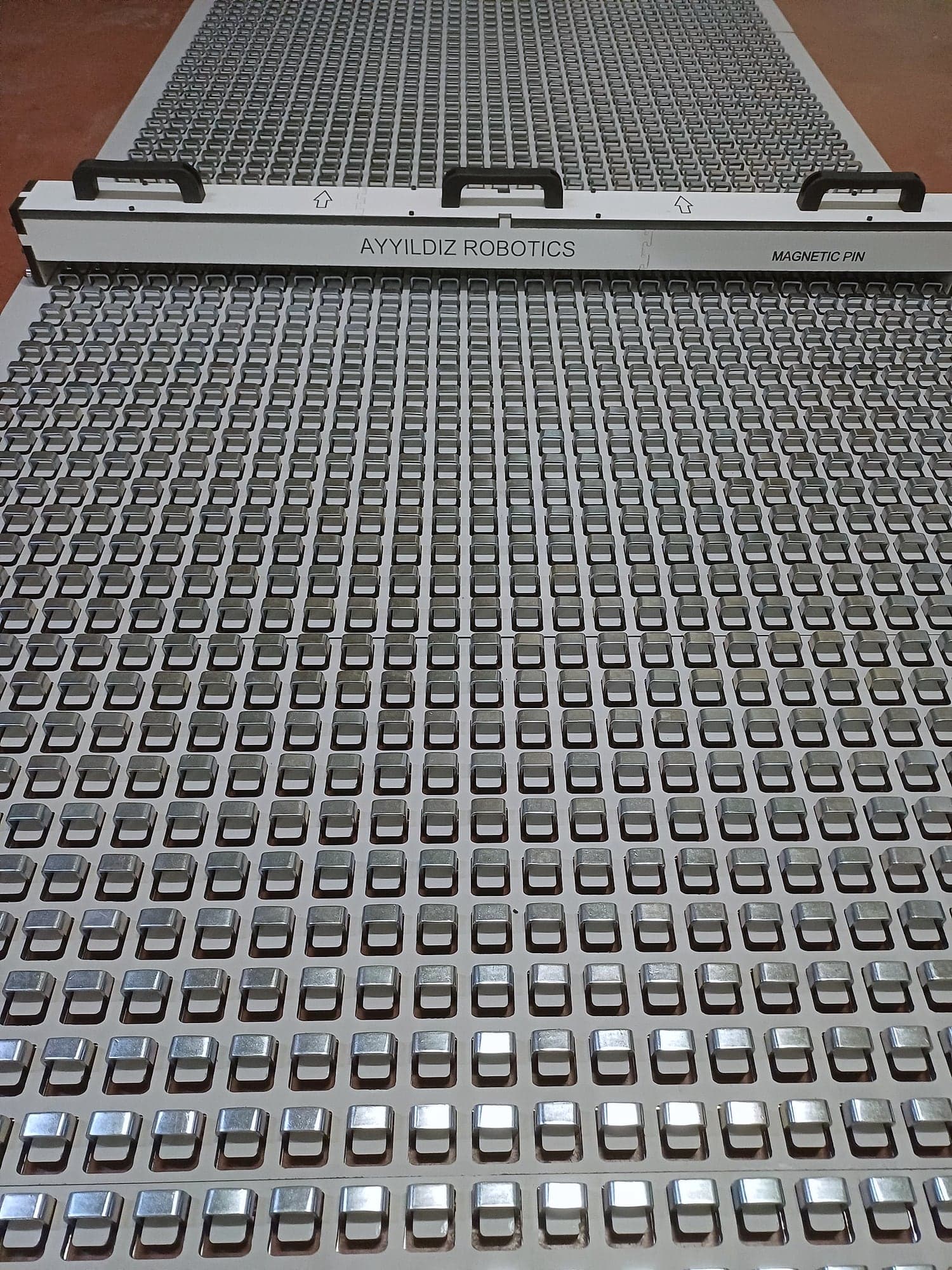
Magnetic pin or conventional pin? We compare the two in terms of speed, maintenance, durability, and cost, and explain which one is right for which facility.
On membrane presses, the pin-fixing method directly affects changeover speed and operator workload. There are two main approaches: conventional mechanical pins and magnetic pin (Magnetic Pin) systems. The right choice depends on the facility's production pace.
Conventional (mechanical) pin
Traditional pins are reliable, but installing and removing them one by one at every changeover takes time. With frequent pattern changes, this time can turn into a significant loss of production over the course of a day.
Magnetic pin (Magnetic Pin)
The magnetic pin provides fast fixing through magnetic force, noticeably reducing installation and removal time. Thanks to its stainless, long-lasting material, maintenance costs go down and operator errors decrease.
Comparison summary
- Speed: The magnetic pin offers a clear advantage during changeovers
- Maintenance: The stainless magnetic pin has a longer service life
- Operator workload: The magnetic system is more practical and error-free
- For facilities that change patterns frequently, the investment in magnetic pins pays for itself in a short time
The AYYILDIZ ROBOTICS branded Magnetic Pin is compatible with Bürkle/Wemhöner/Orma and can be manufactured to custom dimensions. Request a quote for the solution that fits your facility.
Related product & service pages
Request a quote for your project
Membrane press spare parts, magnetic pins or CNC contract manufacturing — tell us your requirement and we will get back to you.