Connector & Contact Pin Machining (CNC Swiss Lathe)
Connector and contact pin machining on the Goodway SW-20 Swiss lathe: 14 families, 140 types, ⌀1–19.6 mm. Brass, stainless, steel, aluminum · h6/H7.
Part Families
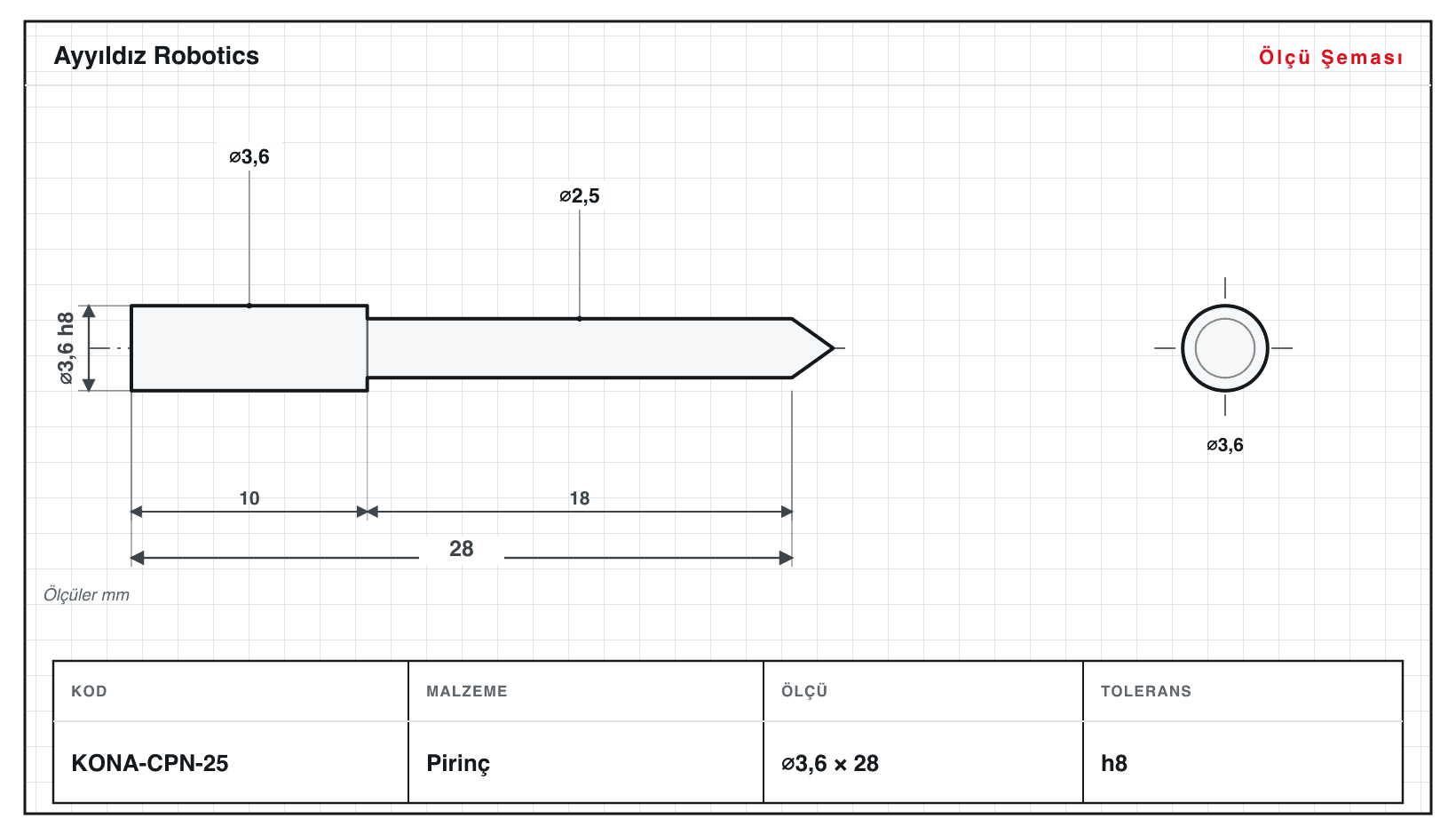
Contact Pin
Turned contact pin with cone tip; brass body and chamfer ensure low resistance and easy socket entry.
⌀1–9 · L 13–50 mm
10 types
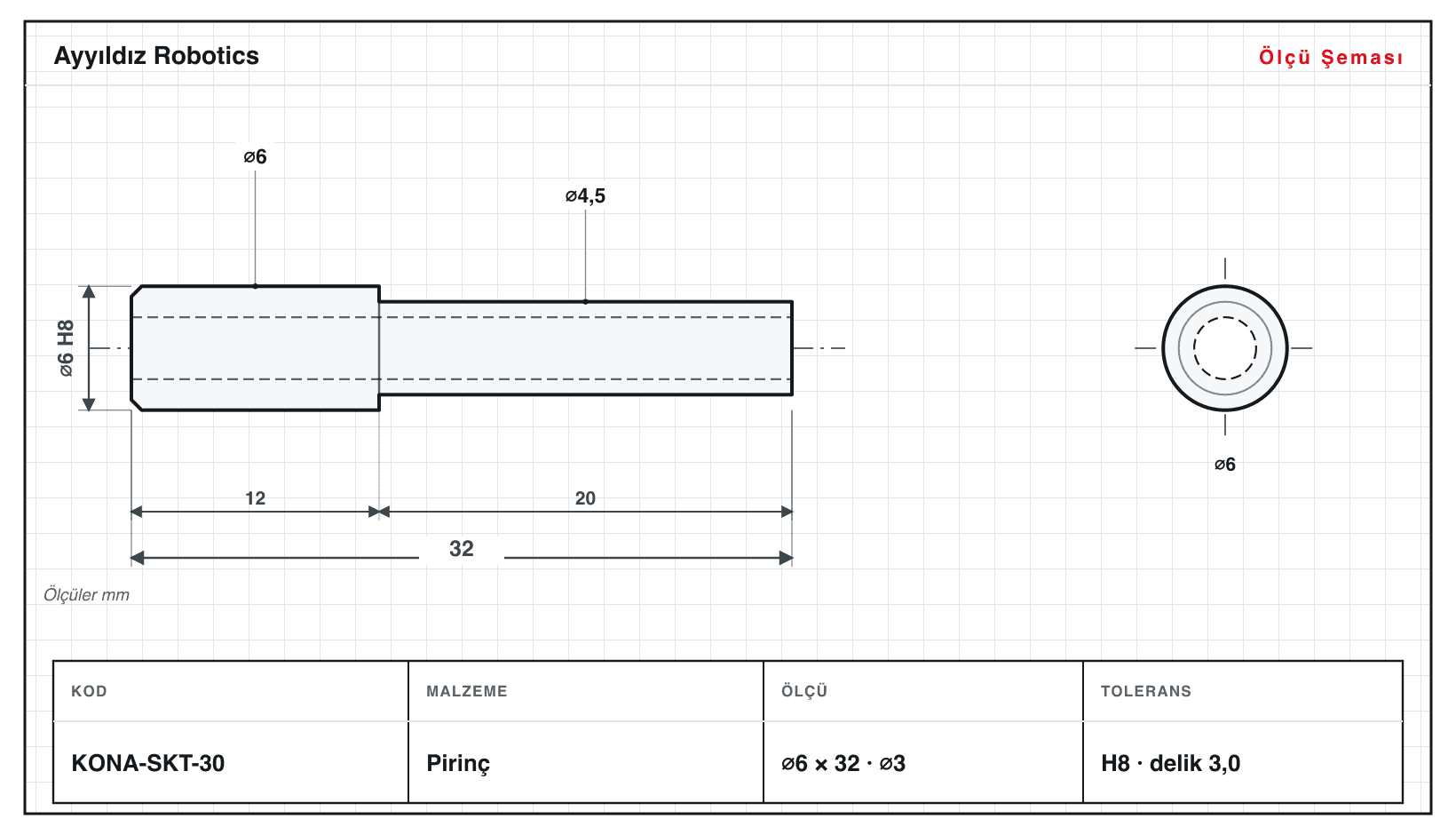
Socket Contact
Female socket contact with bore; precise inner diameter and lead-in chamfer grip the mating pin securely.
⌀2.5–12 · L 16–54 mm
10 types
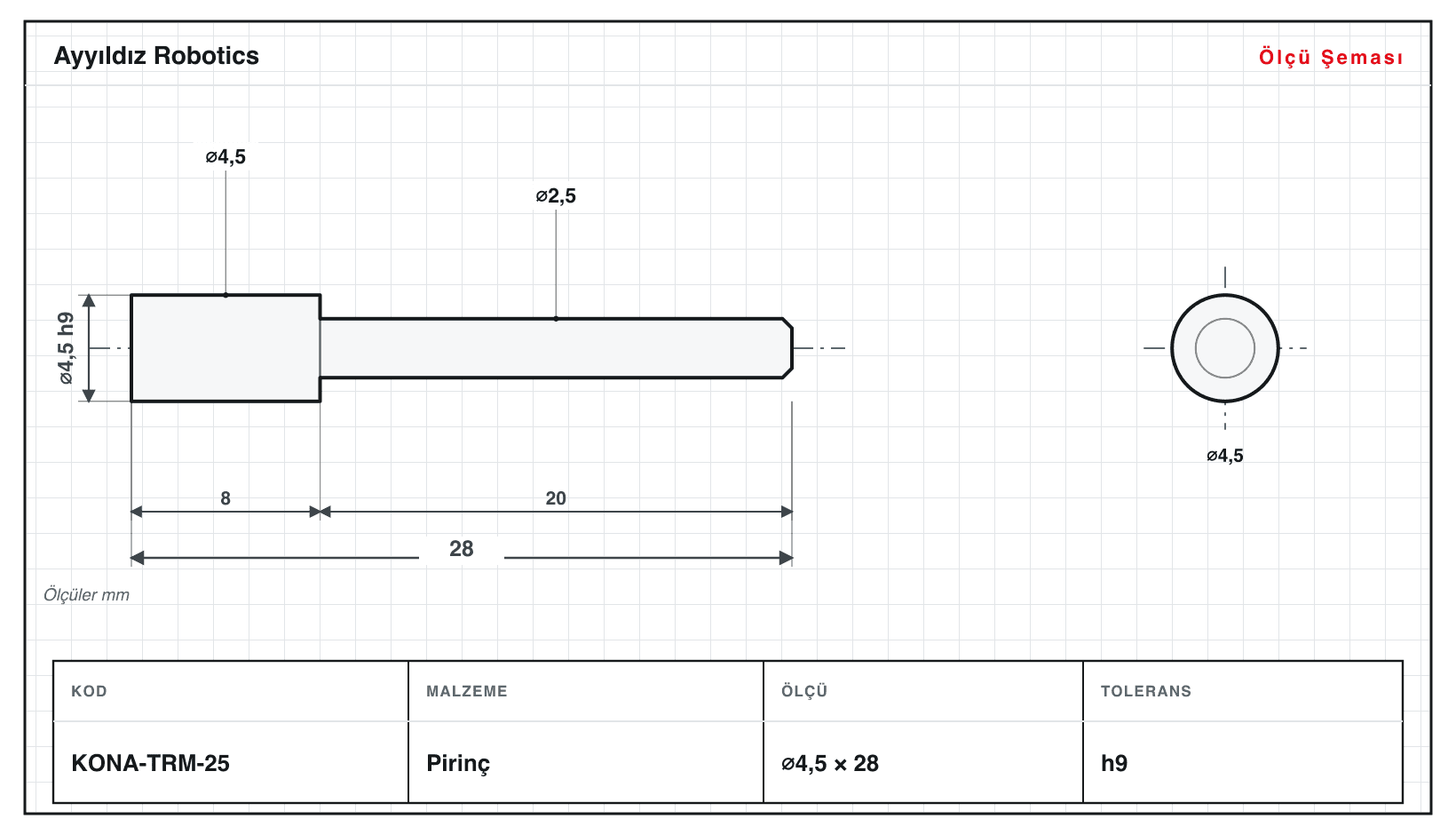
Terminal Pin
Stepped terminal pin for PCBs; shoulder stop and flat PCB tip provide precise board seating.
⌀1.6–11 · L 13–51 mm
10 types
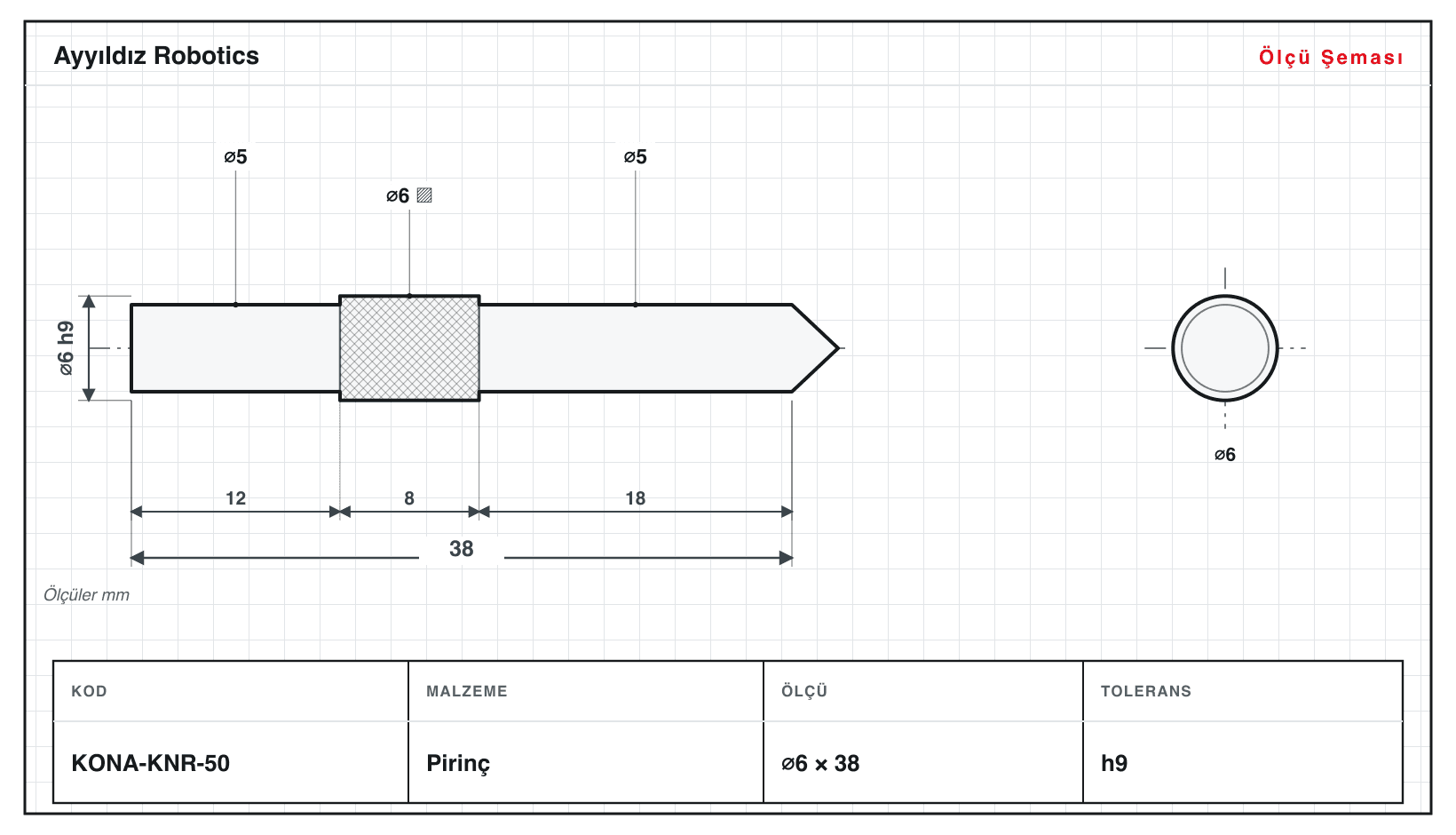
Knurled Contact
Press-fit contact with knurled body; the knurl prevents rotation and pull-out in the plastic housing.
⌀1.8–13.6 · L 18–66 mm
10 types
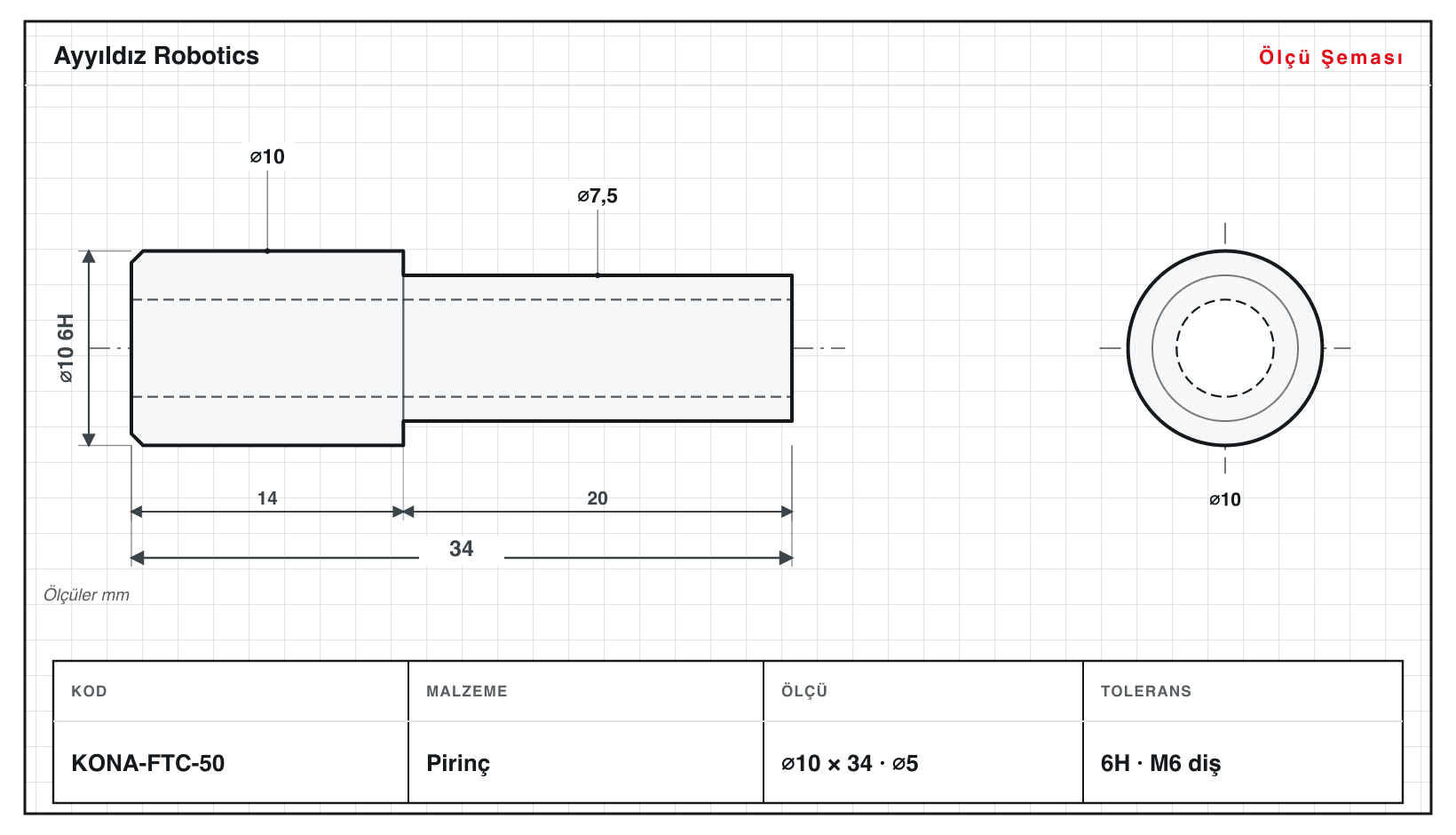
Female Threaded Contact
Female contact with internal thread; screw connection allows a high-current terminal and re-mountable assembly.
⌀4–18 · L 20–56 mm
9 types
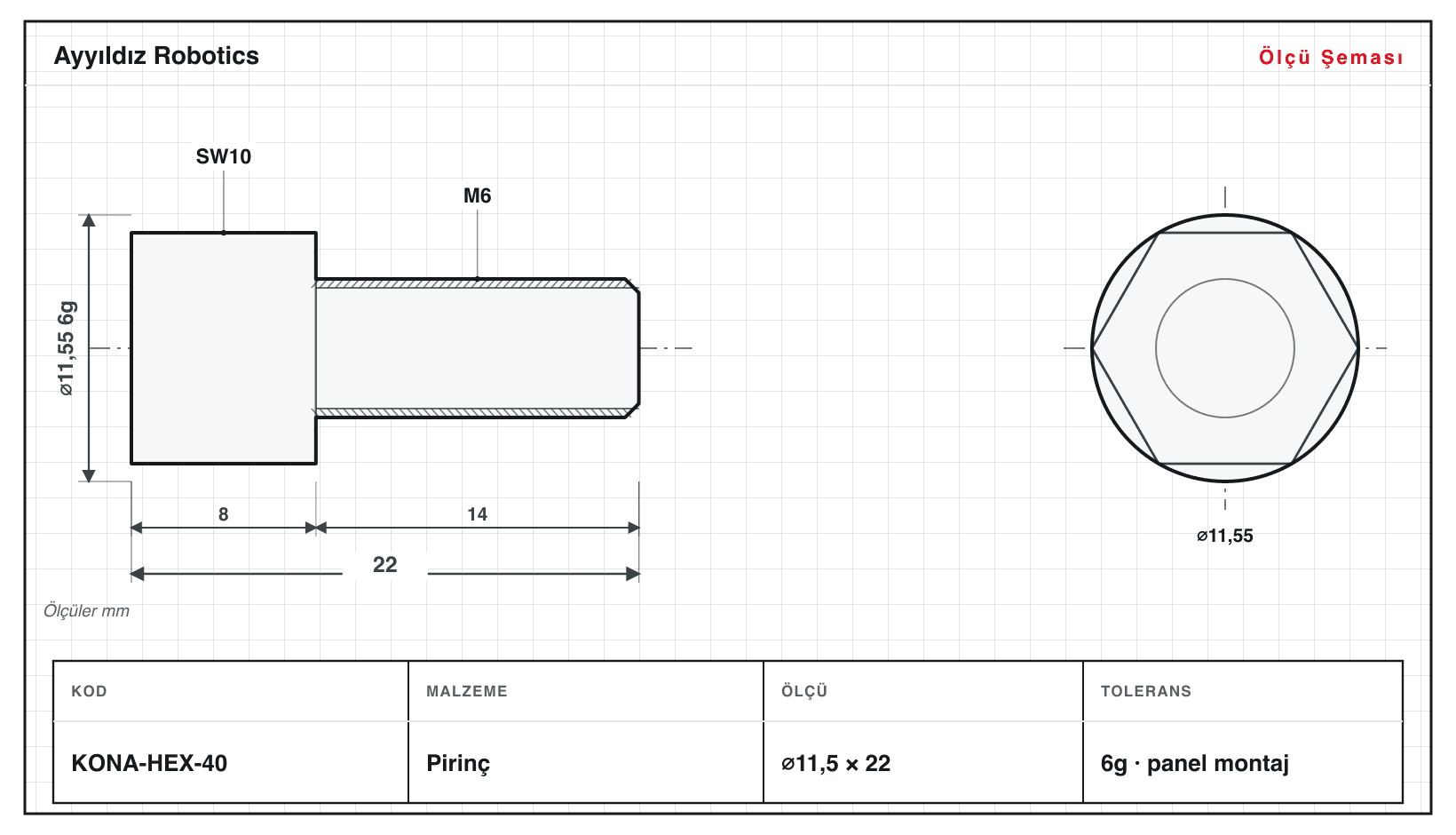
Hex-Body Contact
Hex-body threaded contact; the wrench flats let it clamp as a panel-mount threaded terminal.
⌀6.4–19.6 · L 13–38 mm
9 types
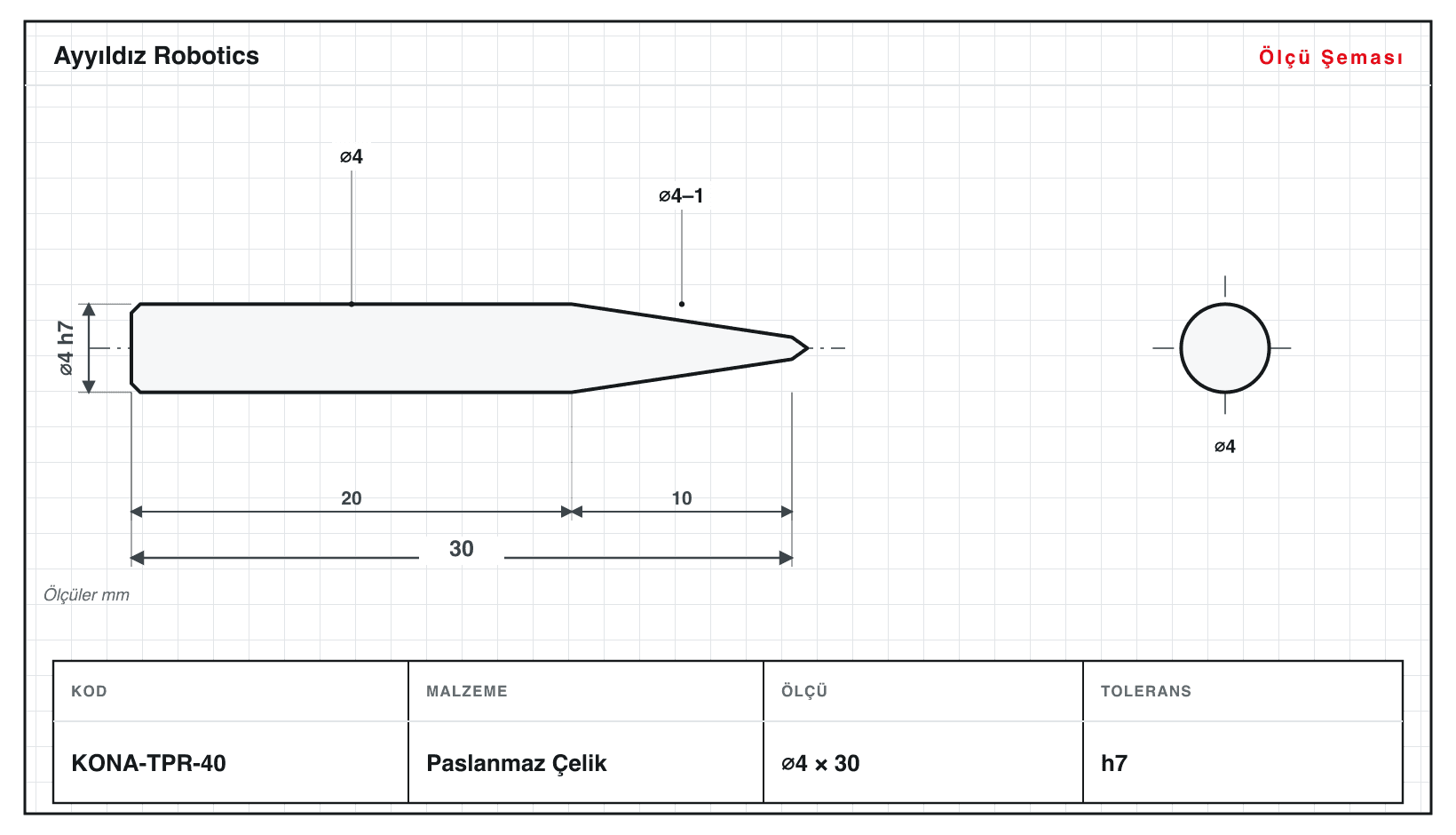
Taper-Tip Test Contact
Spring-probe test contact with long taper tip; the sharp cone self-guides onto pads for reliable measurement.
⌀1–10 · L 14–54 mm
10 types
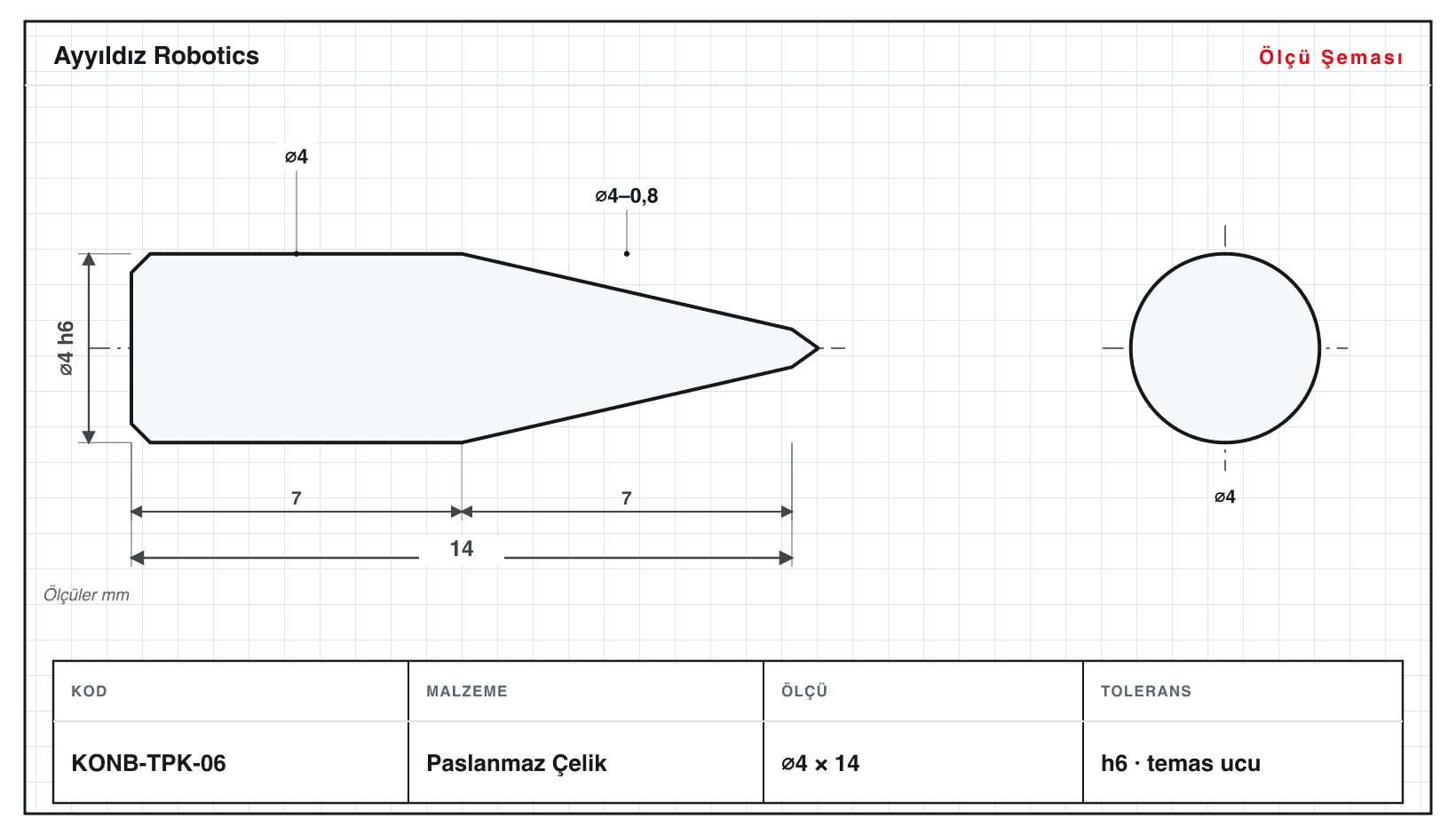
Test Probe Tip (Conical)
Conical-tipped precision contact tip that screws into spring-loaded test probes.
⌀2–6 · L 7–19 mm
10 types
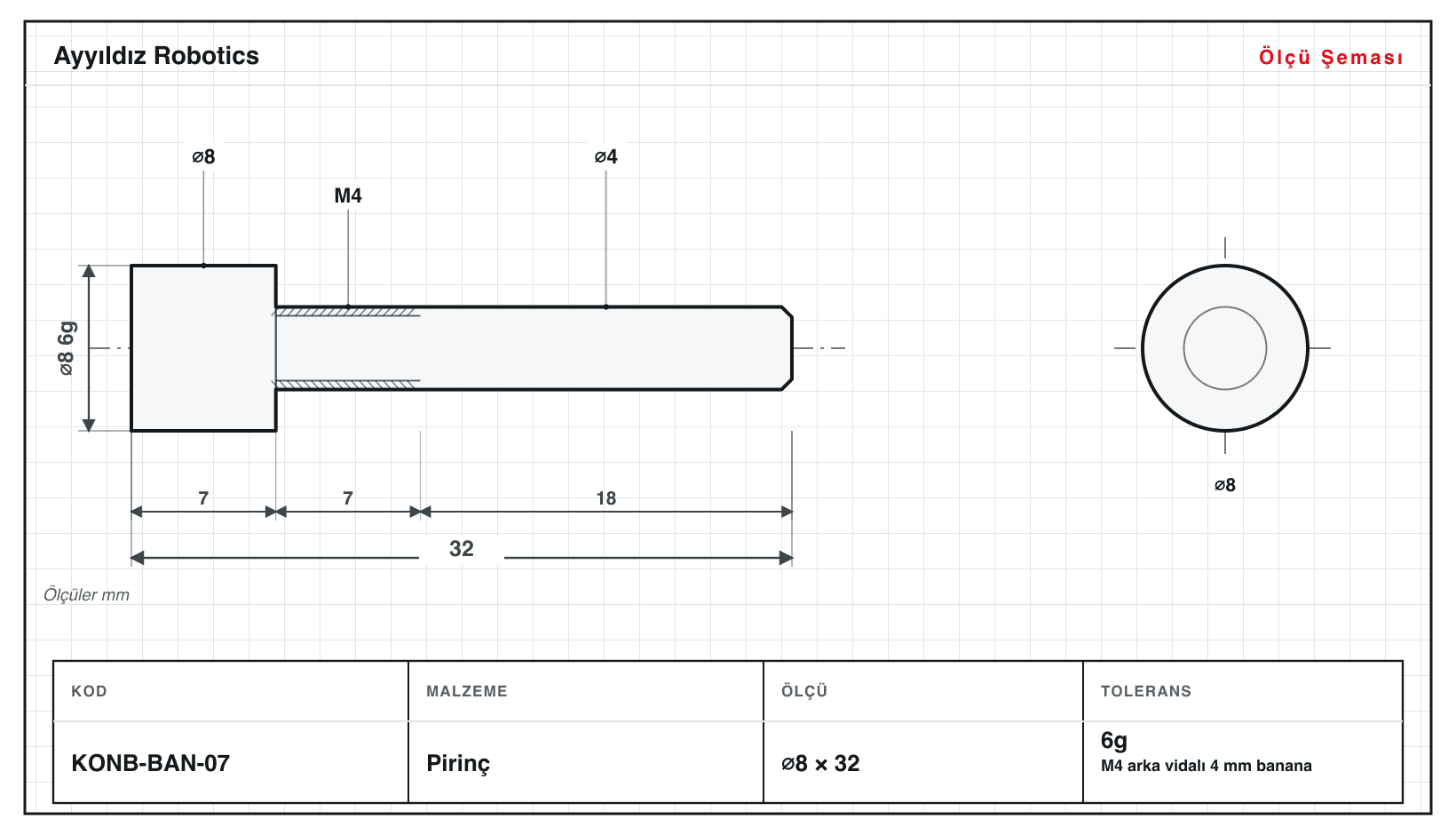
Banana Plug Tip (4 mm)
Test plug tip fitting 4 mm banana sockets with a threaded connection shoulder.
⌀2–12 · L 12–35 mm
11 types
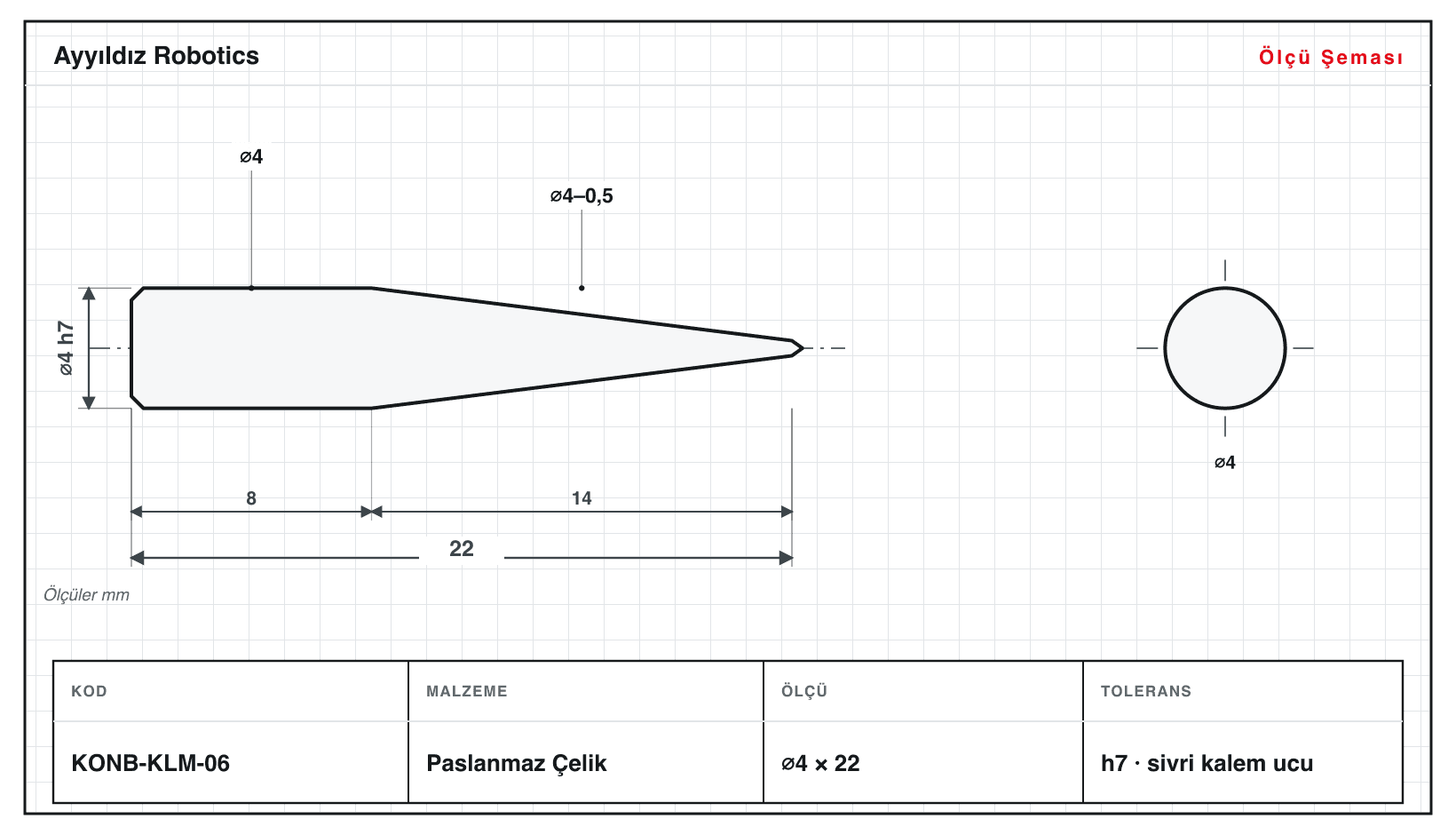
Pen Tip (Sharp Probe)
Slender sharp contact pen tip mounted onto multimeter pencil probes.
⌀2–6.4 · L 18–39 mm
10 types
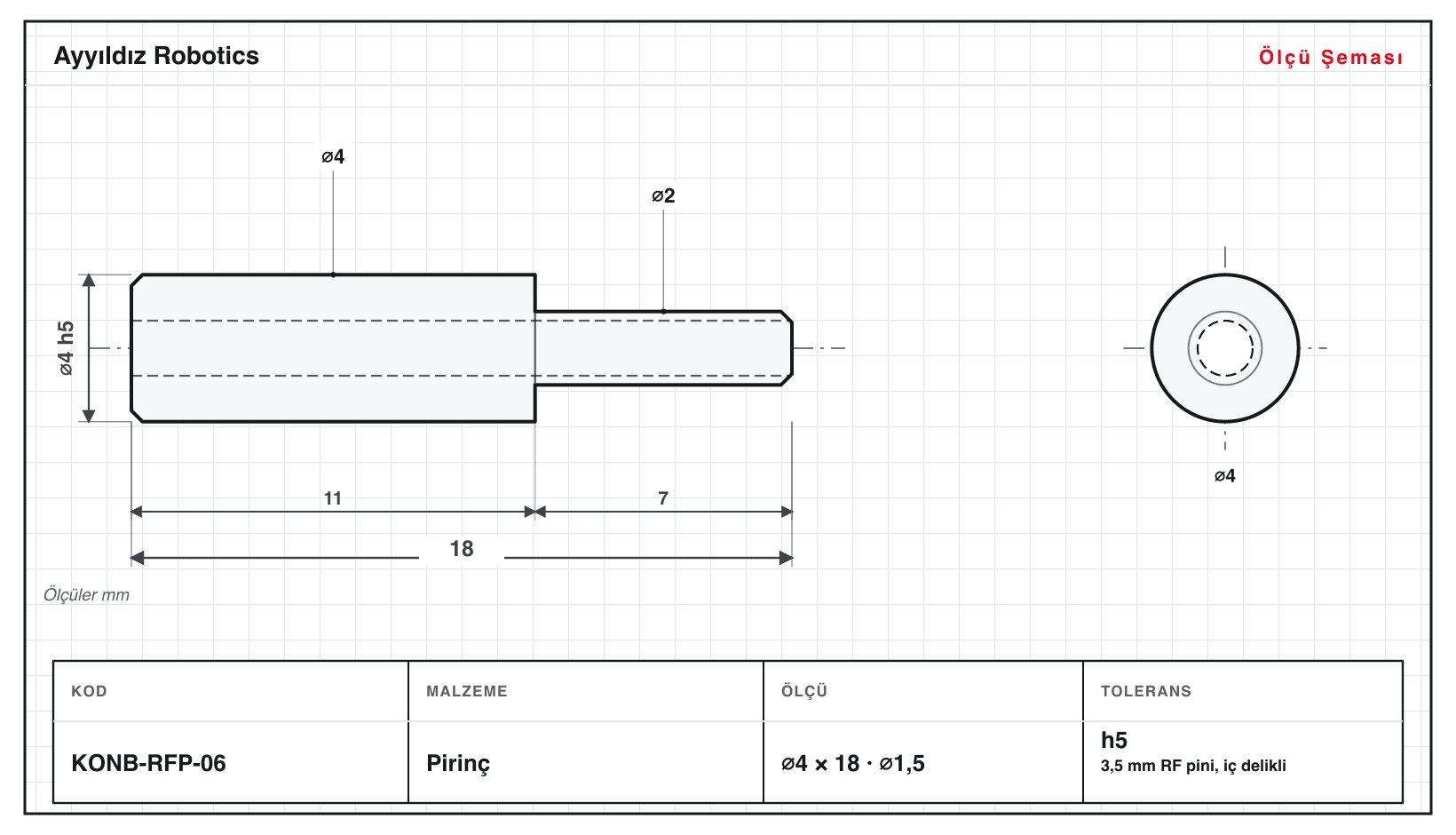
RF Test Pin
Stepped precision-tolerance RF contact pin for high-frequency test sockets.
⌀1.5–8.1 · L 12–23 mm
10 types
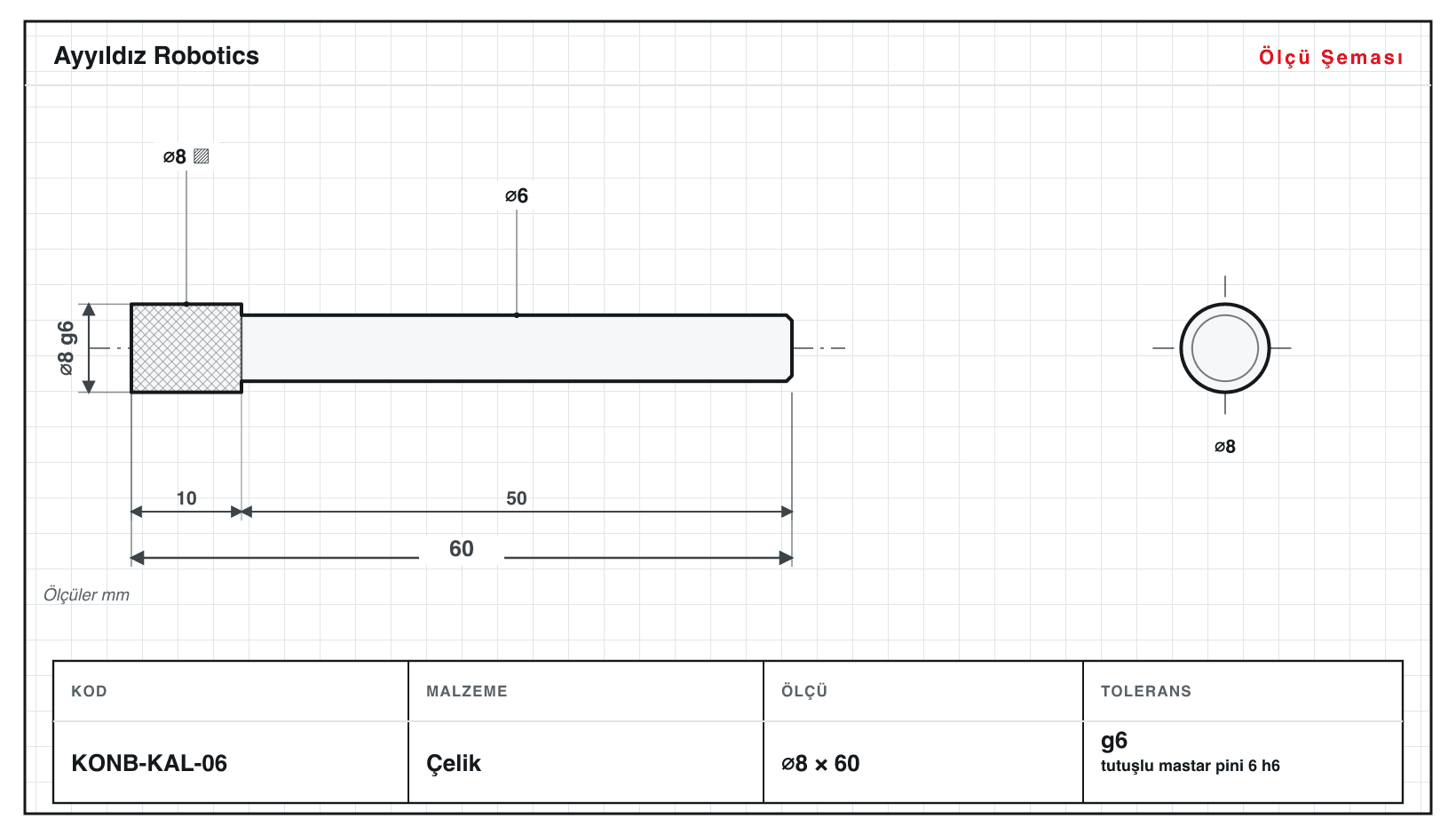
Calibration Pin (Gauge)
Hardened ground precision-diameter pin for dimensional calibration and gauging.
⌀3–12 · L 40–74 mm
11 types
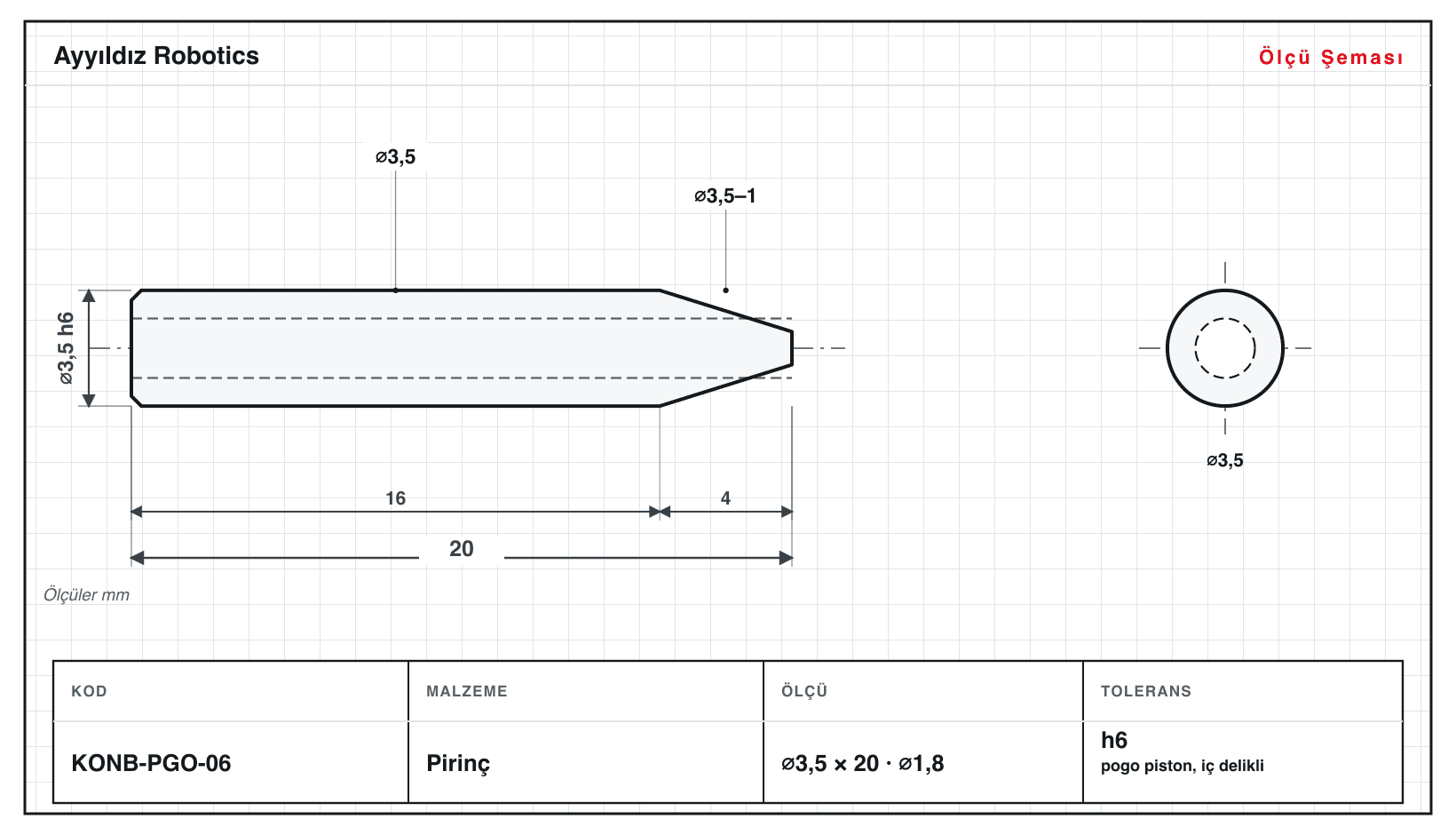
Spring Contact Plunger (Pogo)
Bored spring-contact plunger body that fits inside test-fixture pogo pins.
⌀1.5–5 · L 12–26 mm
10 types
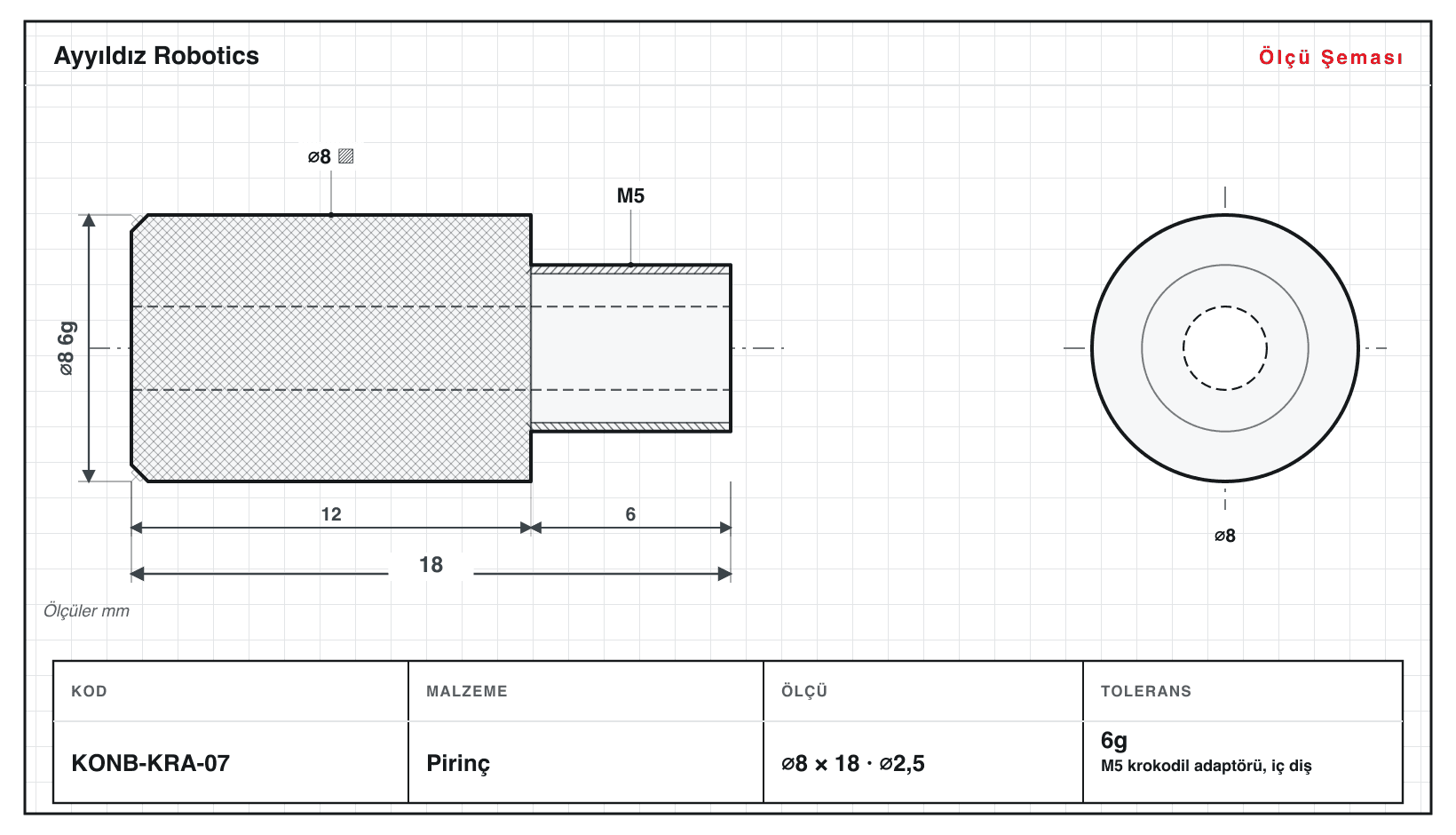
Crocodile Adapter Tip
Internally threaded adapter contact tip joining crocodile clips to measurement leads.
⌀4–15 · L 13–22 mm
10 types
Enter ⌀ and L to list matching variants with code and tolerance.
Search this category by sizeConnector and contact pins are precision-turned parts that carry the electrical and mechanical connection in test-and-measurement systems, automation cabinets, energy hardware and electronic assembly lines. This category spans 14 families and 140 types: contact pins, socket contacts, terminal pins, knurled contacts, internally threaded female contacts, hex-body contacts, tapered-tip test contacts, tapered test-probe tips, 4 mm banana tips, pointed pen-probe tips, RF test pins, calibration (gauge) pins, spring-loaded pogo pistons and crocodile adapter tips. We machine brass for conductivity and easy solderability, stainless steel where corrosion and wear resistance matter, plus steel and aluminum. Ayyıldız Robotics has produced in Düzce since 2009; we turn these parts on the Goodway SW-20 CNC Swiss-type lathe across ⌀1–19.6 mm (the SW-20 ceiling is ⌀20 mm). On critical diameters we hold ISO fits such as h6/H7, and ±0.01 mm is targeted. Beyond the 140 catalog types we produce custom sizes to your technical drawing. Pricing is by quote.
The defining part here is KONA-TPR-10 at L/D 14 — the slenderness a sliding-head lathe is built for. Lengths across the 140 variants run 7–74 mm, the longest being KONB-KAL-11 at 74 mm, still inside the 207 mm single-setup limit. Operations: 28× thread turning, 18× hex flat milling, 47× axial bore, 40× taper turning, 32× knurling.
106 of the 140 variants reference a DIN or ISO standard; the tolerance classes in use are 6H, 6g, H8, g6, h5, h6, h7, h8, h9.
Every part is CNC-turned to your drawing — series, small batches and custom turned parts. Send your drawing (PDF/DWG/STEP) for a quote.
Frequently Asked Questions
We machine four main materials by application: brass for high conductivity and easy solderability, stainless steel where corrosion and wear resistance are needed, steel for mechanical strength, and aluminum for light or conductive uses. When surface treatment such as plating is required, we leave the part at a tolerance that suits post-machining coating. We finalize the material choice together at the quotation stage.
The Goodway SW-20 Swiss lathe is stable enough to hold ISO fit classes such as h6/H7 on seating and mating diameters; ±0.01 mm is targeted on critical diameters. Even on long, slender pin geometries the guide bushing preserves concentricity and surface quality. Just state your tolerance and surface-roughness requirement on the technical drawing.
Yes. The 140 catalog types are a starting point; our core work is custom manufacturing to a drawing. Within the ⌀1–19.6 mm range we adapt features to your part — tapered tips, knurling, internal/external threads, hex bodies, pogo pistons and more. Send a dimensioned technical drawing (PDF/STEP/DWG) and we confirm the dimensions with you before production.
We do not impose a hard minimum; we handle both prototypes/samples and serial production. Because setup cost on a Swiss lathe is fixed, the unit price falls as quantity rises. Approving a sample first and then moving to a run is the most efficient path. We agree on the right batch size together in the quote.
Lead time depends on material supply, quantity and part complexity; we give a firm date with the quote. Send your technical drawing or the catalog type you chose, with material and quantity — we will get back to you. We ship domestically and export from Düzce, Türkiye.
Related Categories
Let Us Create a Solution Tailored to Your Needs
Contact us to discuss your project; let's work out the most suitable solution together.