Membrane Press Pressing Defects and Solutions: Blistering, Gloss Variation, Edge Lifting
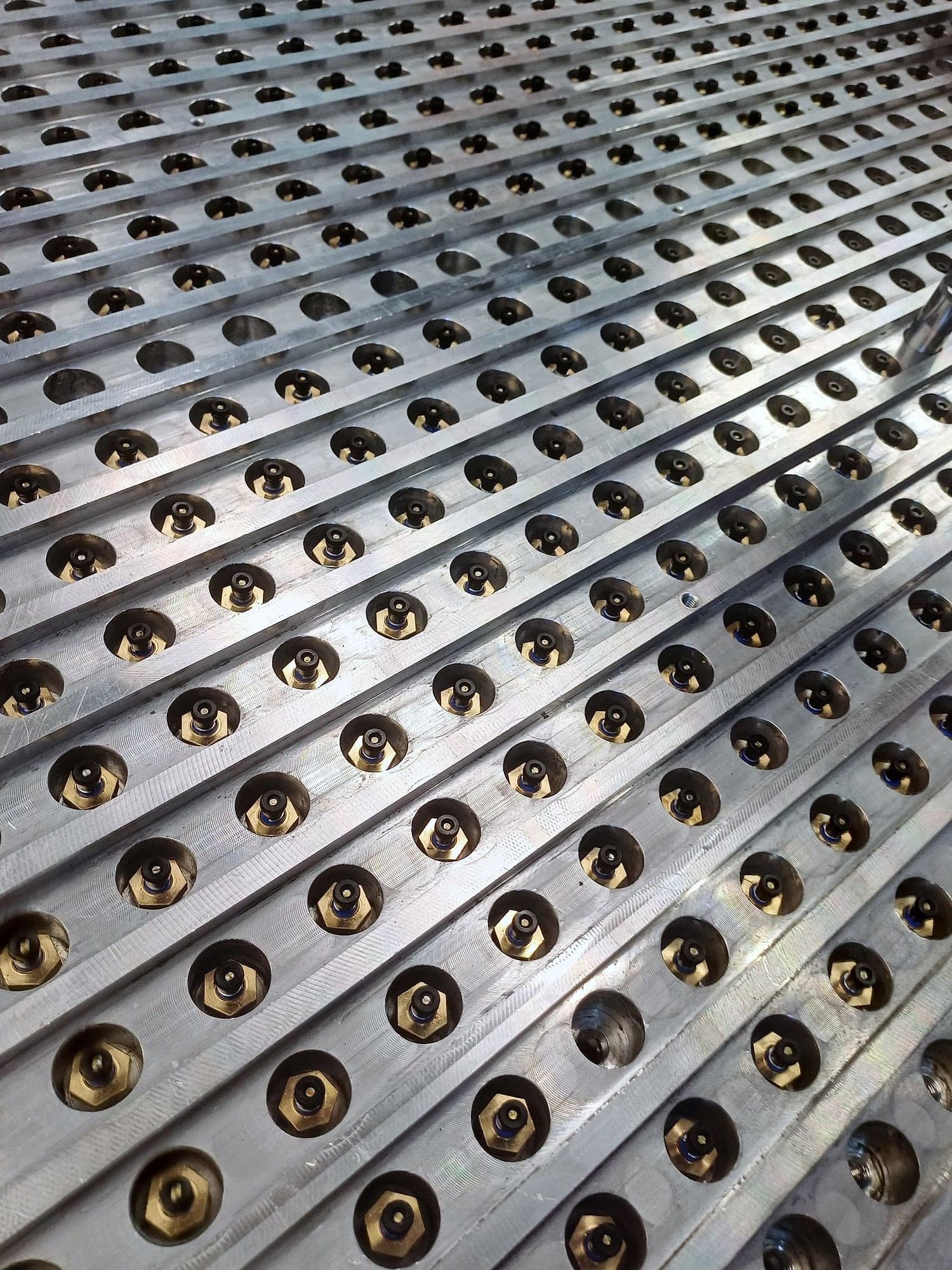
Blistering, gloss variation, edge lifting... We go through the root causes and solutions of the most common pressing defects in membrane presses one by one.
Pressing defects in a membrane press usually stem not from a single cause but from the interplay of heat, vacuum, the membrane and the mechanical components (pin, plate, cover). Diagnosing the fault correctly is half the solution. Let's look at the four most common defects and their causes.
Edge lifting / delamination at the edges
This is generally caused by insufficient vacuum, low temperature or too short a cycle time. A vacuum leak, a worn membrane or a leaking cover will also compromise edge adhesion. Check the vacuum line, the membrane and the cover seal.
Gloss variation / localized matt areas
This is the classic sign of uneven pressure. It is most often caused by the pin plate losing its flatness or by worn pins, so the pressure is too high in some areas and too low in others. Check the condition of the plate and the pins.
Bubbles / air pockets
These can result from a worn membrane, a vacuum leak, or moisture/dust on the surface. Check the membrane and the vacuum performance; make sure the parts are clean and dry.
Quick checklist
- Vacuum value and leak check
- Membrane condition (tears / thinning / hardening)
- Pin and pin plate wear / flatness
- Cover seal and gasket surface
- Heat uniformity and cycle time / recipe conformity
We renew the wear components at the root of these defects (pin, plate, cover) to original dimensions, and provide on-site diagnosis and intervention when needed. Contact us for recurring pressing defects.
Related product & service pages
Request a quote for your project
Membrane press spare parts, magnetic pins or CNC contract manufacturing — tell us your requirement and we will get back to you.