What Is the Difference Between a Vacuum Press and a Membrane Press?
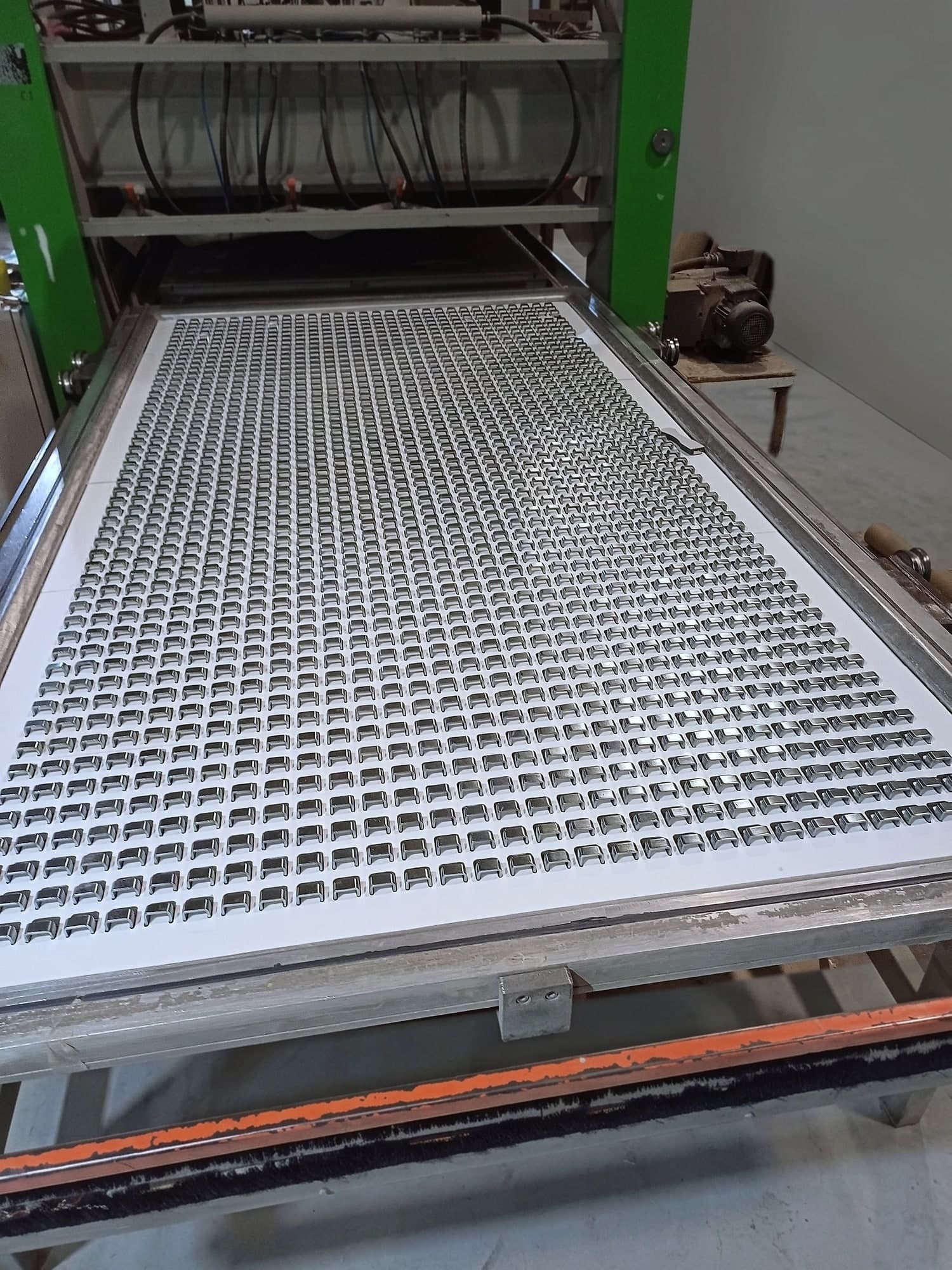
The terms vacuum press and membrane press are often confused. We explain the difference between them, how they work and which one is suitable for which job.
Among surface-lamination machines, the two most commonly confused terms are the vacuum press and the membrane press. Both make use of the vacuum principle; however, the way they transfer pressure to the workpiece and their usage scenarios differ.
Membrane press
In a membrane press, a flexible membrane (sheet) is drawn down onto the workpiece by vacuum and bonds the laminate under heat. It delivers superior results on parts with complex profiles and recesses or protrusions (e.g. a routed kitchen door).
Vacuum / bladder press
In vacuum (bladder) press systems, pressure is distributed evenly across wider and flatter surfaces with the help of air/a bladder. It offers efficient solutions for flat panels and large surfaces.
Which one should you choose?
- Complex profiles, deep patterns, kitchen doors → membrane press
- Large flat panels, high-volume surface lamination → vacuum/bladder press
- Most workshops need pin/plate/spare-part support for both requirements
For both systems we supply pin plates, spare-part manufacturing and technical support. Tell us your requirement and let us determine the right solution together.
Related product & service pages
Request a quote for your project
Membrane press spare parts, magnetic pins or CNC contract manufacturing — tell us your requirement and we will get back to you.